 Back to Level 4
BeatBounds
A rhythm platformer where the music decides what you are allowed to do — and our major project in the final year of university, made with one other teammate. This page collects the art and interface work I contributed: the character you play, the ground you land on, the sky behind it, the story around it, and every screen in between.
About the game
BeatBounds was our major project in the final year of university, made with one other teammate. It is a rhythm game: what the player is allowed to do is driven entirely by the music. Each track hands the player its own set of movement and action options, and those rules have to be followed in time with the beat — with visual cues marking the moment the music changes.
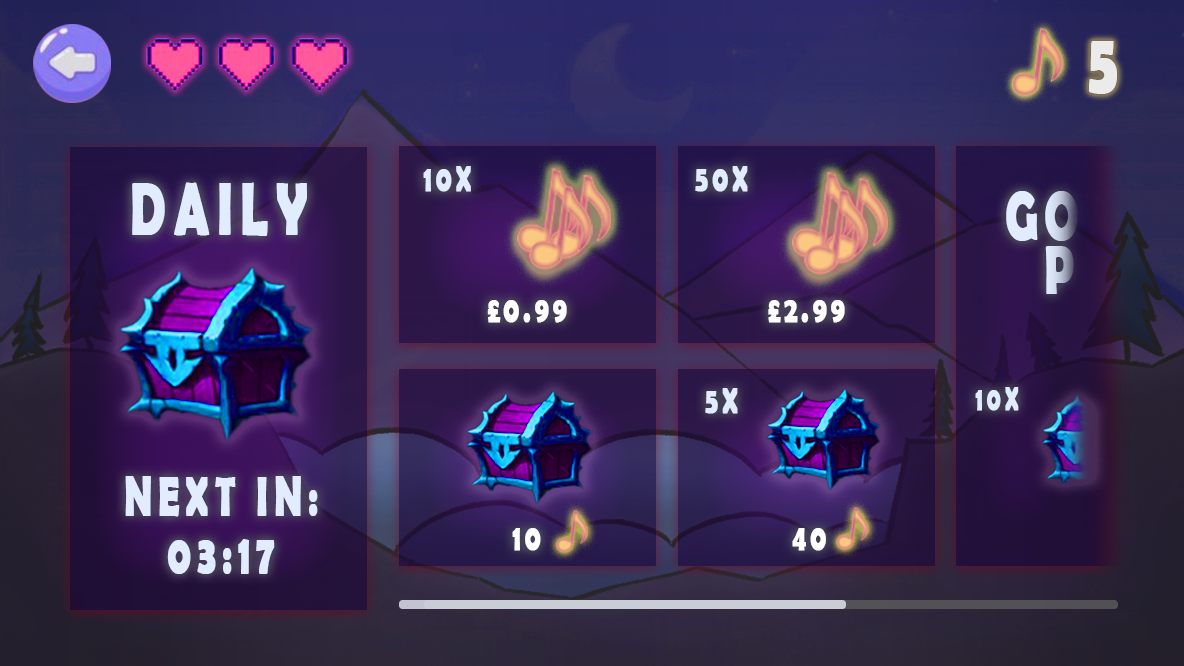
Menus & HUD
Interface
Every screen the player passes through — the opening screen and its alternates, the pause state, the shop, and the HUD carried through a level. A rhythm game gives the interface very little room to interrupt, so most of the work went into what could be removed rather than what could be added.
View all 6 →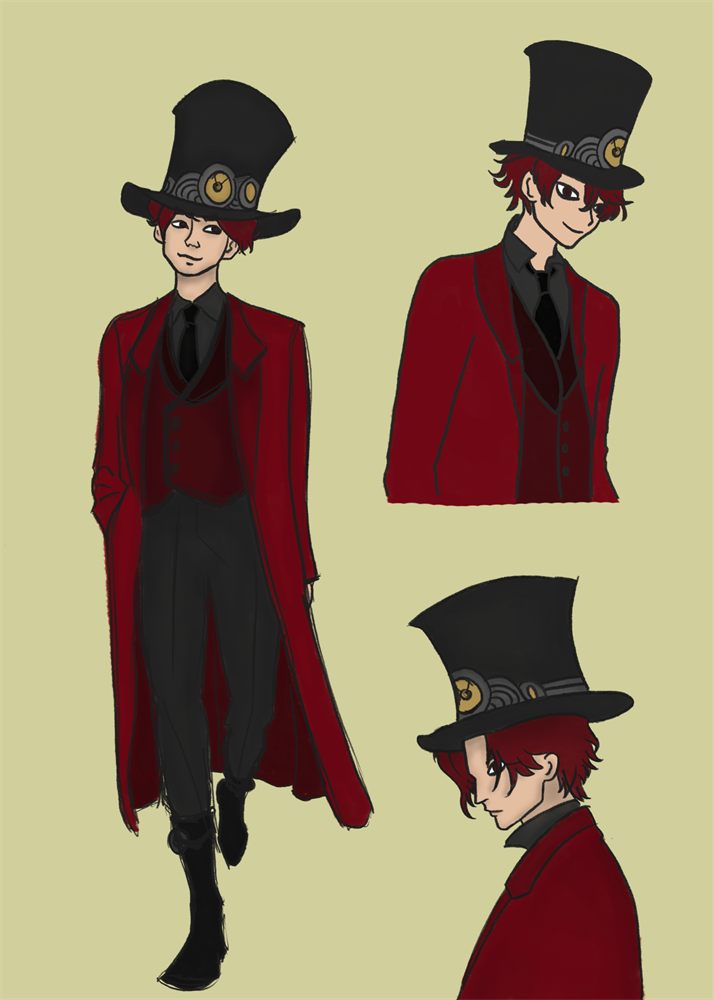
Concepts & sprites
Character Design
The player character from reference sheets and early concepts through to the sprite sheet that shipped into the build. A platformer character has to stay readable at speed and at a small size, which narrowed the silhouette considerably between the first concepts and the last.
View all 4 →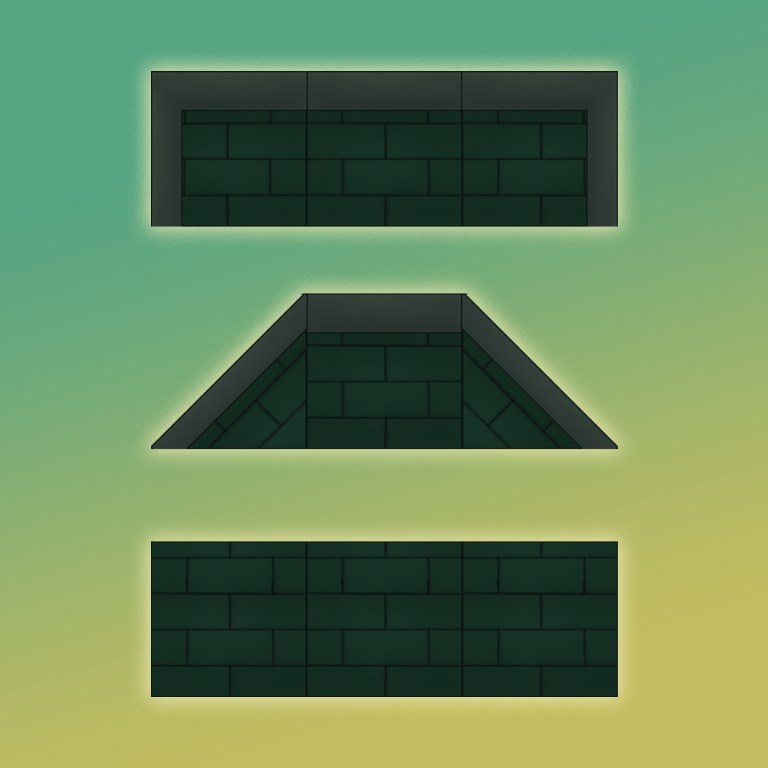
Tilesets
Ground Tiles
Forest, cave and mountain tilesets, six tiles each — a top edge, its two corners, a slope either side and a plain fill — plus the poison water surface. Tiles are the one asset where a mistake repeats itself across a whole level, so they are shown assembled rather than piece by piece, which is the only way the joins can actually be judged.
View all 20 →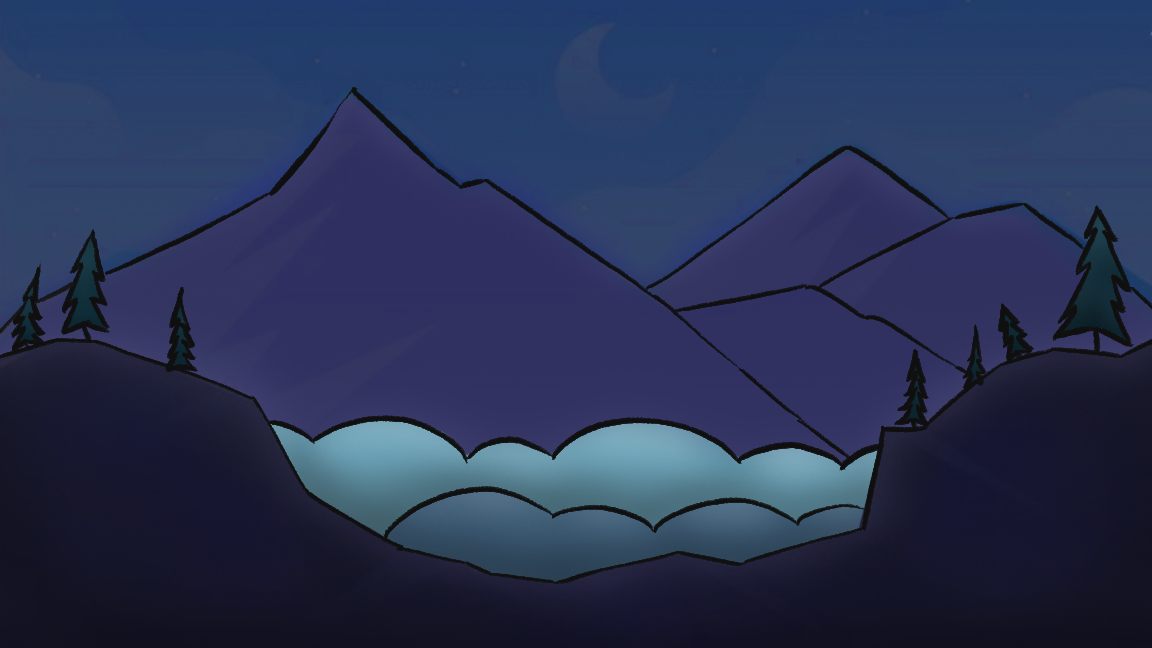
Environments
Level Backgrounds
The painted environments sitting behind play. They carry the mood of each level while staying quiet enough that the tiles the player actually lands on remain the highest contrast thing on screen.
View all 3 →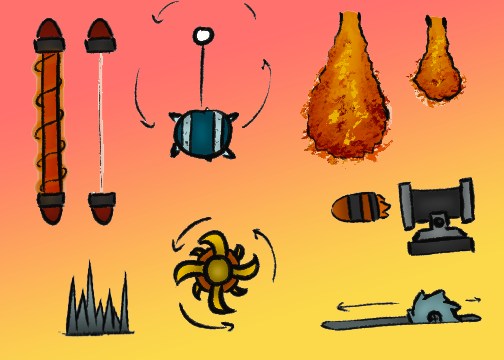
Props & obstacles
In-Game Assets
Obstacles and props, explored as a set rather than individually so that anything hazardous shares a visual language the player can learn once and then trust.
View all 2 →
Branding
Logos
Wordmark exploration for the game, from a wide first sweep through to the options that made the shortlist and the one that ended up on the title screen.
View all 4 →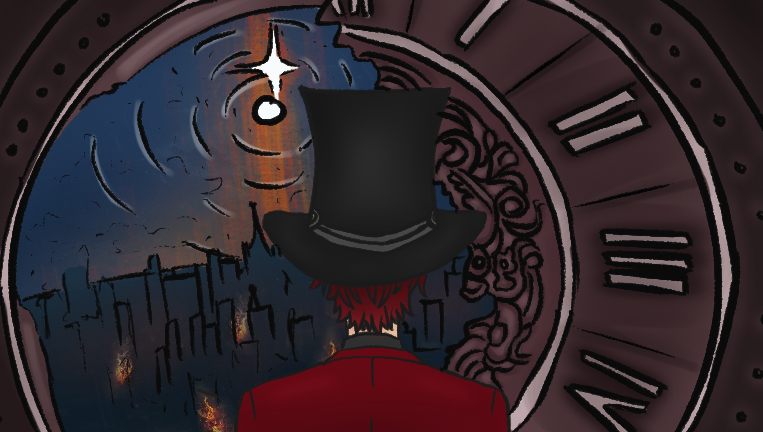
Story
Narrative
The player character guards time — every alternative timeline and world, watched from a room of monitors. While he is on duty something breaks in the main timeline, the alarm goes up, and he goes out through the gates to find it: up the moonlit stairs to the great clock that keeps time for every world. He finds it broken. That is where the game begins, and why he is running through the levels at all — he is looking for the key to put it right.
Six panels carry that, so the game never has to stop and explain itself. The whole sequence was roughed out on a single annotated sheet first.
View all 7 →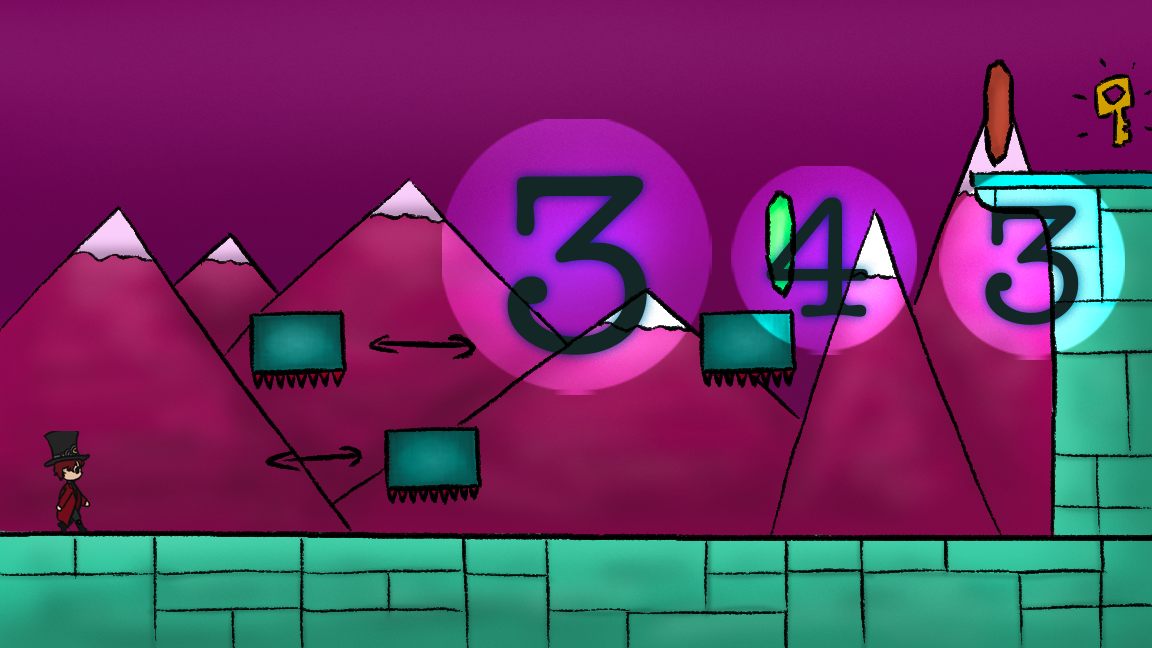
12 pieces
Drafts & Process
Twelve pieces of working material, from the first handwritten notes through quick layout sketches to painted level concepts. The notes are worth more than they look: one of them is where the whole rule gets written down — a numbered beat ring decides what the player is allowed to do, walk on a two, walk and jump on a three, movement restricted on a dashed one.
View all 12 →